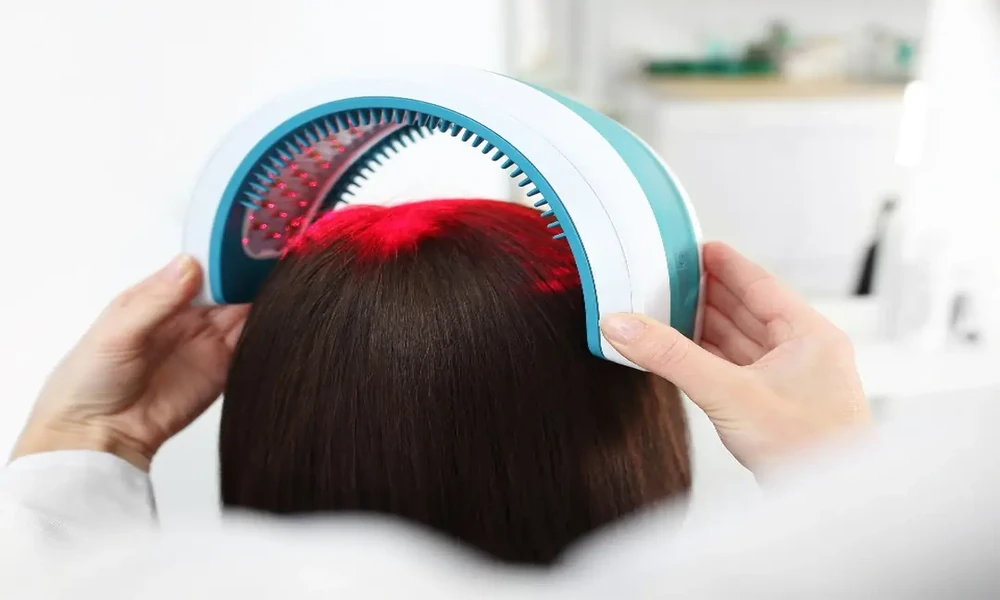
Low-Level Laser Therapy (LLLT) is a non-invasive approach that may have a place within a broader hair loss treatment plan. When supporting existing hair is part of the treatment goal, low-level laser therapy for hair loss may be considered as one possible approach. Its suitability depends on factors such as the type of hair loss, the extent of thinning and the intended treatment outcome.
Understanding Low-Level Laser Therapy
LLLT uses low-intensity light to provide targeted exposure to the scalp. Unlike surgical hair restoration, it does not involve removing or relocating hair follicles. It is also different from treatments that rely on medication to address hair loss.
The approach has been studied for its potential effect on activity associated with hair follicles. This provides a basis for considering LLLT as one option within hair loss care. However, research findings do not mean that every person will experience the same response or outcome.
It’s Place in Hair Loss Care
The role of LLLT depends on what the wider treatment plan is intended to achieve. For some people, the focus may be on supporting existing thinning rather than replacing follicles through a surgical procedure. In such situations, low-level laser therapy for hair loss may be considered as part of the overall approach.
LLLT does not automatically replace other treatment options. Instead, it can have a complementary role when it matches the person’s hair loss pattern and treatment goals. This makes its position within a treatment plan different from that of procedures designed to restore hair by moving follicles.
What It May Support
One potential reason for considering LLLT is its focus on areas where existing hair has become thinner. The treatment does not create new follicles. Its potential role is instead linked to supporting the condition and activity of follicles that are already present.
Studies of low-intensity light treatments have examined their possible effects on processes associated with hair follicles. These findings help explain why LLLT may be included in selected hair loss plans. The potential benefit should still be viewed carefully because individual responses can vary.
When It May Be Considered
LLLT may be relevant when the treatment objective involves existing hair in areas affected by thinning. The pattern and extent of hair loss can influence whether this approach has a suitable place within the plan. The amount of hair remaining in the affected area can also be an important consideration.
Treatment goals matter as well. Someone looking to support thinning hair may have different requirements from someone seeking a procedure that replaces follicles. Considering these factors together helps determine whether LLLT is appropriate for the intended outcome.
Evaluating The Treatment Approach
The response to LLLT is not necessarily something that can be judged through short-term changes. Hair growth and visible changes in density can take time to assess. Looking at progress over an appropriate period provides a more meaningful basis for understanding whether the approach is contributing to the intended goal.
Keeping Expectations Realistic
LLLT should be viewed as a potential component of hair loss care rather than a guaranteed method of regrowth. Outcomes can differ based on the person’s individual circumstances, hair loss pattern and treatment objectives.
For suitable individuals, this approach may contribute to a broader strategy focused on existing hair. Recognizing both its limitations and potential benefits gives a clearer understanding of what the treatment may offer. Keeping expectations realistic can also help determine whether LLLT is a suitable part of an individual’s hair loss treatment plan.
FAQ
What role does LLLT have in hair loss treatment?
It may provide a non-invasive option for certain thinning concerns and can be included when it supports the goals of the wider treatment plan.
How is it different from a hair transplant?
A hair transplant involves surgically moving hair follicles from one area to another. LLLT uses low-intensity light directed at the scalp and does not relocate follicles.
Can this treatment be used with other options?
It may be considered alongside other suitable treatments when each option has a clear and compatible purpose within the overall plan.